To understand the depth of peace in Islamic theology, one must start at the very top. In the Quran, God is described by ninety nine beautiful names. Among them is As-Salaam, which means “The Peace” or “The Source of Peace.” This means peace is not just an abstract idea. It is a divine attribute that flows from the Creator to creation.
The Quran states, “He is Allah, than Whom there is no other Allah, the Sovereign Lord, the Holy One, Peace, the Keeper of Faith, the Guardian, the Majestic, the Compeller, the Superb” (Quran 59:23). Because God is Peace, the destination for believers is called Dar As-Salaam, meaning the “Home of Peace.” This connection is vital. The journey of a Muslim is a journey towards peace.
A Command for Harmony: Quranic Verses on Peace
The Quran is filled with direct calls to pursue peace and justice. These are active commands meant to guide human behavior. When we look at the scripture holistically, peace is the rule, and conflict is a tragic exception permitted only under strict conditions of self defense.
One comprehensive command is found in Surah Al Baqarah: “O believers! Enter into Islam wholeheartedly and do not follow Satan’s footsteps. Surely he is your sworn enemy” (Quran 2:208). The phrase “enter into peace” is a direct instruction to make it the foundation of one’s life. It is a call to reject division.
The Sanctity of Human Life
Perhaps the most powerful verse is in Surah Al Ma’idah: “Whosoever kills a human being for other than manslaughter or corruption in the earth, it shall be as if he had killed all mankind, and whoso saves the life of one, it shall be as if he had saved the life of all mankind” (Quran 5:32). This verse elevates saving a single person to saving all of humanity. It is a profound statement on the value of every individual.
Rules of Engagement
When facing hostility, the Quran provides a clear ethic. It commands, “Fight in the cause of Allah those who fight you, but do not transgress. Indeed, Allah does not like transgressors” (Quran 2:190). Even in battle, there are lines that cannot be crossed. Harm to non combatants is explicitly forbidden.
Most importantly, the Quran commands openness to ending conflict. “But if the enemy inclines towards peace, do thou also incline towards peace, and trust in God” (Quran 8:61). This verse of peace instructs believers to accept peace offerings.
The Prophetic Example: Muhammad’s Model of Mercy
When we move from the Quran to the life of the Prophet Muhammad, the teachings on peace come alive. His biography is filled with moments that demonstrate how to embody divine commands. His entire mission was framed as a mercy to all of creation. The Quran says, “And We have not sent you, O Muhammad, except as a mercy to the worlds” (Quran 21:107).
This title of mercy was reflected in his actions. Before entering Mecca as a conqueror after years of persecution, he granted a general amnesty. He asked his former enemies, “What do you think I will do to you?” They replied, “You are a noble brother.” He then said, “Go, for you are free.” This act of magnanimity is one of the most powerful examples of peace in Islamic history.
Daily Wisdom from the Prophet
Beyond grand gestures, his daily life was a study in gentle conduct. He consistently advised against anger. A man came to him and said, “Advise me.” The Prophet replied, “Do not become angry.” The man asked repeatedly, and each time the answer was the same. This highlights a core principle: peace begins with inner calm.
His relationships with people of other faiths provide a powerful model. In Medina, he established a charter outlining the rights of Muslim, Jewish, and pagan communities. It declared them one community, guaranteeing freedom of religion. He visited the sick of other faiths and allowed Christians to worship in his mosque.

Key Sayings of the Prophet on Peace
The sayings of the Prophet Muhammad, known as Hadith, offer profound wisdom on spreading peace. One of the most repeated hadith connects faith directly to peacemaking.
The Prophet said:
- “You will not enter Paradise until you believe.”
- “You will not believe until you love one another.”
- “Shall I tell you something that if you did it, you would love one another? Spread peace among you.”
This turns peace from a passive concept into an active, daily practice. The simple act of saying “As Salaamu Alaikum” (peace be upon you) becomes a prayer for well being.
Defining a True Believer
He also defined a Muslim in terms of their impact on others. In a powerful statement, he said, “A Muslim is the one from whose tongue and hands people are safe.” This means a true follower poses no threat to others, either through harsh words or harmful actions.
A true believer embodies these qualities:
- They speak words that build up, not tear down.
- Their actions create safety, not fear.
- They are a source of trust in every relationship.
- People feel secure and at ease in their presence.
This safety is the foundation upon which strong, peaceful communities are built.
Peace in Daily Actions
The Prophet taught that feeding the hungry and greeting people with peace are among the best deeds. He said, “O people, spread peace, feed the hungry, and pray at night when people are sleeping, you will enter Paradise with peace.” This links spiritual practice with social responsibility.
These sayings show that peace in Islam is found in simple, consistent choices. It is in the smile we offer a stranger and the gentle word we offer to someone in distress. Small acts accumulate to create a life of harmony.
Classical Scholars on Inner Peace
Beyond foundational texts, Islamic scholars have written extensively on pursuing peace. Imam Al Ghazali wrote on purifying the heart. He taught that true peace comes from removing envy, arrogance, and greed. For him, the greatest struggle was the internal battle against one’s own ego.
Rumi, the beloved poet and Sufi mystic, spoke of peace as the natural state of a soul connected to the Divine. He wrote, “Your task is not to seek for love, but merely to seek and find all the barriers within yourself that you have built against it.” This speaks directly to inner peace.
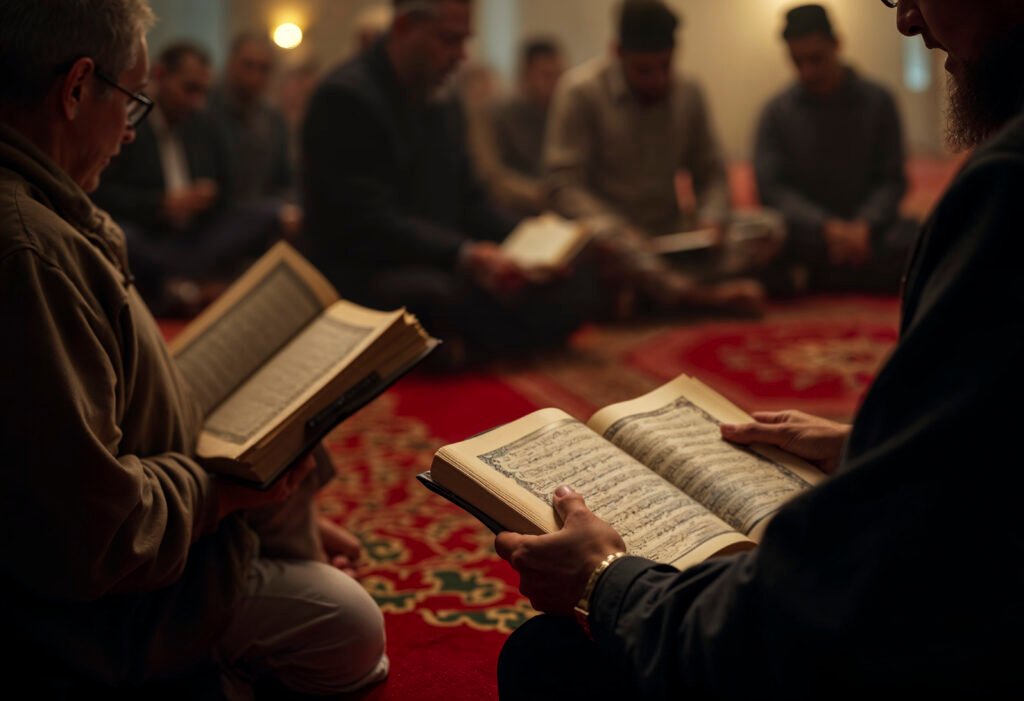
Key Islamic Quotes on Peace
| Source | Quote | Core Message |
|---|---|---|
| Quran (2:208) | “O believers! Enter into Islam wholeheartedly.” | Embrace peace as a complete way of life. |
| Quran (5:32) | “…if anyone saved a life, it would be as if they saved all humanity.” | The immense value of every human life. |
| Quran (8:61) | “If the enemy inclines towards peace, then incline to it also.” | Always be open to ending conflict. |
| Prophet Muhammad | “A Muslim is the one from whose tongue and hands people are safe.” | A true believer is a source of safety. |
| Prophet Muhammad | “Spread peace among yourselves.” | Actively share greetings of peace to build love. |
| Rumi | “The art of knowing is knowing what to ignore.” | Inner peace comes from letting go of distractions. |
Modern Voices on Peace and Justice
In the modern era, Muslim thinkers continue to draw on these deep traditions. They apply principles of justice and reconciliation to contemporary challenges. Malcolm X, after his pilgrimage to Mecca, spoke powerfully about Islamic teachings on peace transcending race. He witnessed a brotherhood that defied the divisions of his time.
Many contemporary scholars emphasize that peace and justice are inseparable. There can be no lasting peace without justice. They point to the Quranic command to “stand out firmly for justice, even if it be against yourselves” (Quran 4:135). This commitment to fairness is the foundation for a peaceful society.
Common Misconceptions Addressed
It is important to address the misconception that Islam is a violent religion. The overwhelming weight of primary sources shows that peace is the normative state. Verses dealing with conflict are specific to historical contexts of self defense and have strict ethical rules.
The core facts are clear:
- The word “Islam” shares its root with “Salaam,” meaning peace.
- A Muslim is “one who submits to God in peace.”
- The daily greeting of millions is a prayer for peace.
- Extremists who promote violence are condemned by mainstream scholarship.
Understanding this helps to see the religion through its own lens.
Practical Lessons for Daily Life
What can we take from all of this? The first lesson is to start within. Inner peace is not a luxury; it is a necessity. Without it, we react with anger and fear. With it, we respond with wisdom and compassion.
The second lesson is to be a source of safety. In every interaction, ask: Do people feel safe with me? Do my words build up or tear down? When we commit to being someone from whose tongue and hands others are safe, we become active agents of peace. This is the living legacy of Islamic teachings on peace.

Frequently Asked Questions
What does the word “Islam” mean in relation to peace?
The word “Islam” shares a root with “Salaam,” which means peace. It implies that achieving peace comes through submission to the Divine will.
How do Islam and peace quotes address conflict resolution?
The Quran commands: “If the enemy inclines towards peace, then incline to it also” (Quran 8:61). This foundational Islam and peace quote places reconciliation as the highest goal.
How did the Prophet Muhammad promote peace?
He forgave his enemies, established treaties with Jewish tribes, and taught followers to control anger and spread greetings of peace.
What are sayings of the Prophet about peace?
He said, “A Muslim is the one from whose tongue and hands people are safe.” He also taught, “Spread peace among yourselves.”
Does Islam promote peace with non Muslims?
Yes. The Quran commands justice and kindness towards all peaceful people, regardless of their faith (Quran 60:8).
How do Islam and peace quotes define a good Muslim?
The Prophet said, “A Muslim is the one from whose tongue and hands people are safe.” This profound Islam and peace quote makes safety the measure of true faith.
Are there Islam and peace quotes about forgiveness?
Yes. “Let them pardon and forgive. Do you not love that God should forgive you?” (Quran 24:22). This Islam and peace quote connects forgiving others with receiving divine forgiveness.
Conclusion
The Islamic quotes on peace we have explored are not relics of the past. They are living words with the power to transform hearts today. The Quran commands us to enter fully into peace. The Prophet modeled what it means to be a source of safety for others.
In a chaotic world, these teachings offer an anchor. They remind us that true peace begins within. It grows in the words we choose and the actions we take. May the timeless wisdom of Islam and peace quotes guide you toward greater compassion and tranquility in your daily life.